
Moderate-progressive throwdowns loom on the Eastside
Plus a DUI dilemma and a (mostly) symbolic recall over PDC vacancies


The dwindling caucus of business-friendy Democrats in the state Legislature got some encouraging news Monday with a text from Rep. Amy Walen, D-Kirkland: “Yes, I’m running.”
Walen’s re-election campaign, which surprised her own colleagues and supporters, queues up an intraparty fight in the 48th Legislative District, with Redmond City Council member Jessica Forsythe running to Walen’s left. While the race doesn’t affect Democrats’ ample majority either way, it will be a bellwether signal whether the Legislature’s increasingly leftward tilt is palatable to voters after the party caught its white whale, aka a progressive income tax, this session and following last session’s record-breaking business tax increases.
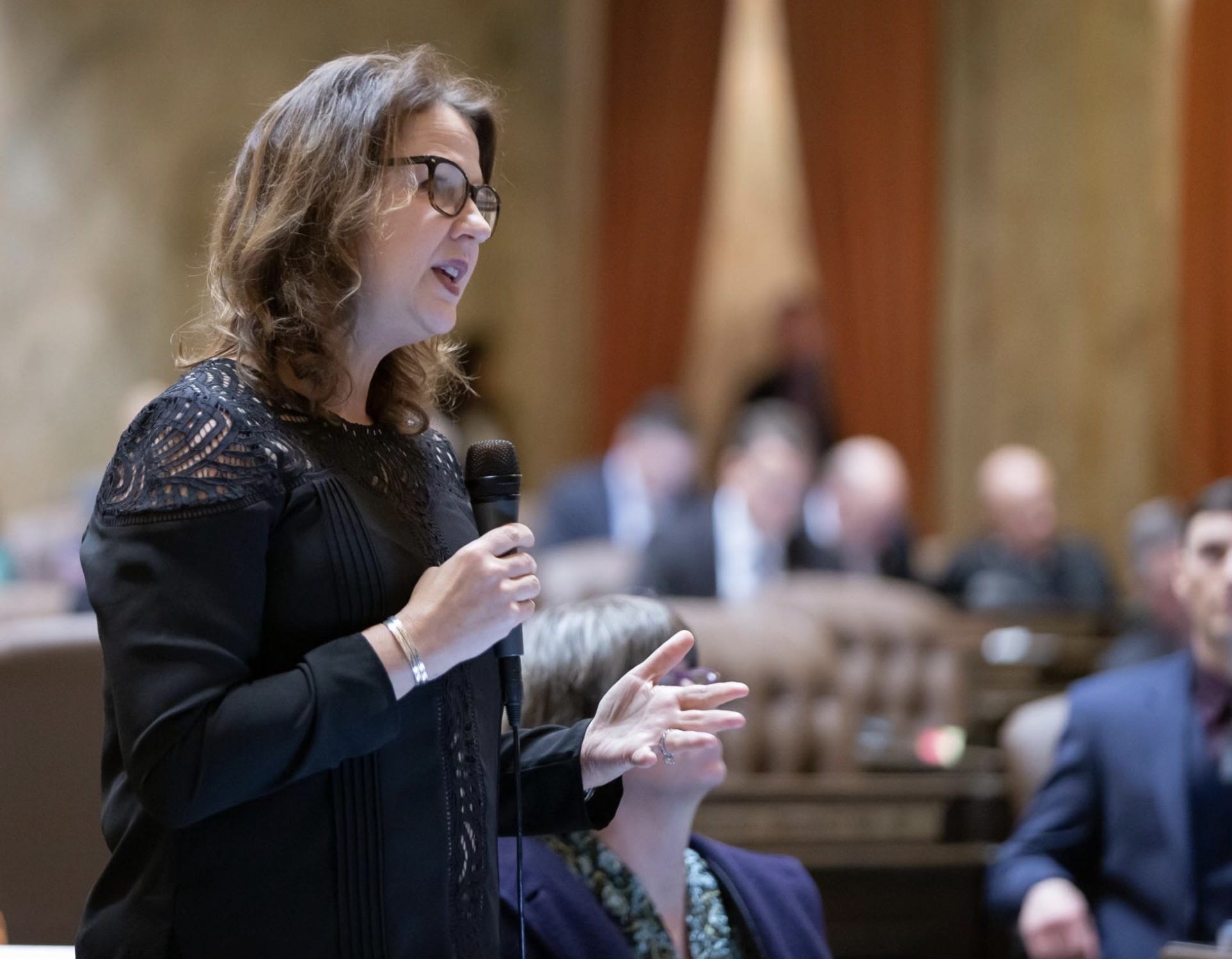
Another pillar of that dwindling caucus, Rep. Larry Springer, D-Kirkland, took a break Monday from rototilling his garden to say he hasn’t yet decided if he’ll run for his 12th term. The 79-year-old said he’ll probably announce next week after gauging his level of support; if he does, he too will face opposition from the left. So too will Senate Majority Leader Jamie Pedersen, D-Seattle, cast as a corporatist and incrementalist despite his leadership in catching that whale.
Why you should care: That caucus is dwindling for a reason. The Trump era has emboldened progressives to pick off or push out more centrist members because, as Springer said, “the further left you are, the better you look” as a foil to the President. Democrats’ biggest backers, public sector labor unions, are self-motivated to push candidates left on taxes. To paraphrase former Sen.-now-Secretary of State Steve Hobbs, a famous member of the so-called centrist “roadkill caucus,” when you’re in the middle of the road, you get run over. Hobbs himself was removed from the Legislature via an entertaining bit of realpolitik that put him in the SOS’s office.
Walen got run over in a 2025 Senate race in the 48th LD against Vandana Slatter despite a wave of business support that swept in $665K in donations and another $350K in independent spending mostly funded by Big Business’ Jobs PAC, which got big checks that year from Realtors, Microsoft, Marathon Petroleum, dentists and others. This session, Walen gave us a peek into her caucus’s deliberations on the millionaires’ tax by proposing a Constitutional amendment to fix the income tax at $1M-plus, which thoroughly ticked off House leadership. It went down, and she was a “no” on the tax.
Forsythe, who heads the nonprofit Emerge Washington, which trains women and non-binary candidates to run for elected office, said the millionaire’s tax “didn’t seem to be an issue for this district,” which has the 2nd-highest percentage of likely payers among the state’s 39 legislative districts. Intraparty challenges such as this one reflect a feeling that, “we’ve done certain things for a long time and people are looking for sustainable, tangible change,” said Forsythe, who filed her campaign finance paperwork to run last November.
The money race for the bellwether 48LD race will be interesting. The House Democratic caucus generally sits it out until after the primary on intraparty challenges. Forsythe has union connections (her nonprofit is a member of SEIU Local 205), suggesting labor money will flow her way. Walen, who left Olympia in March looking like she’d like to burn the place down, is starting without a big fundraising war chest, with about $50K in her surplus campaign account left over from the 2025 race. Forsythe has raised more than $53K so far, and said she’s aiming for $150-200K overall.
The aforementioned public-sector union money has been known to play aggressively against moderate incumbents. Most notably, those players went big against then-Sen. Mark Mullet back in 2020, backing a union nurse who challenged the famously business-friendly Democrat out in East King County’s 5th Legislative District. Mullet, who left the Legislature for an ill-fated run for governor and was elected mayor of Issaquah last year, barely squeaked by thanks to big bucks from the business lobby.
Springer faced a less-showy challenge from the left in 2024. Union organizer Melissa Demyan gave him a scare in the August primary, although he rallied to win in November by more than 13 percentage points after aggressive spending on his behalf, again from the business lobby.
We’ll be watching closely to see whether those same money dynamics play out next year. One effect of the diminishing moderate blocs in the Democratic caucuses is that it creates fewer leverage points for the cadre of high-dollar lobbyists who get paid primarily to check the most progressive inclinations of the Legislature.1
We’re regular consumers of the disclosure reports required of those lobbyists, which include any wining and dining of lawmakers. Walen and Springer appear frequently. Should they depart, willingly or otherwise, new dining companions might be hard to come by.
JM/PQ
A DUI dilemma
Drivers pleading guilty to DUIs are holding off on court-ordered breathalyzers per a revealing state audit.
Specifically, fewer and fewer of them are footing the bill to install what the courts call ignition interlock devices. Turns out just four out of ten such drivers pay to hook one up, especially if they’re hovering around the poverty line. Said devices are part of a diversion program for first-time offenders designed to let them hold onto their licenses so long as they give them a blow before and during a trip.
The Legislature’s auditor found in a report released this month that the installation rate among the lowest earners was only 30%. For reference, IIDs can go for as much as $2,700 per year before fines and insurance, which can set you back $5,000. And up to half of drivers who plead guilty to a DUI in court make less than $28K per year per that audit. The state’s financial assistance program isn’t much help between subpar customer service and noxious wait times.
It’s not quite clear why said drivers passed on installing one in their rides. The audit supposed the given drivers gave up driving altogether or opted to drive someone else’s ride (which is illegal).
As far as solutions go, the Auditor’s office recommended the Department of Licensing enforce its contracts with IID makers with regards to timely reporting and and monitoring uncooperative drivers. It also found that Licensing and the Washington State Patrol could also afford to scare/alert said drivers about installing their IIDs.
There was no stated need for legislation in the report, but lawmakers may need to reach into state coffers to enforce the law. Should the Legislature ever lower the state blood alcohol limit (as has been proposed multiple times in recent years), enforcement costs could fluctuate if more drivers forgo that second adult beverage for the road. In the meantime, it remains to be seen how many inebriated drivers wartime gas prices keep off the road.
TG
Recommended Reading:
A (mostly) symbolic recall bid over PDC vacancies
Jerry Cornfield over at the Washington State Standard digs into the somewhat odd situation at the Public Disclosure Commission, which has two vacant seats, including one that has been empty for nearly all of Gov. Bob Ferguson’s tenure.
That leaves the campaign finance watchdog with a bare quorum to do business, which evaporates anytime one of the remaining three commissioners can’t be at the meeting.
Frustration with that situation prompted Connor Edwards, a professional campaign treasurer and PDC gadfly, to file a recall petition against Ferguson last week, noting that the governor is required by law to fill vacancies frequently. The governor’s people declined to discuss the situation.
Edwards has a history of this kind of provocative behavior. He filed more than 800 PDC complaints in 2024 to highlight the agency’s somewhat laissez-faire complaint-driven approach to enforcement of state campaign finance laws. It actually helped spur the agency to pursue more proactive enforcement. In this case, the legal bar for a recall in Washington is quite high, so it’s unlikely Ferguson winds up facing the voters over this.
The interesting question here is why the governor would dally on this task. It’s a bad look, and it doesn’t seem that difficult. He could, for example, follow precedent by appointing a prominent former statehouse reporter.2 Although many pols mouth platitudes about campaign transparency, the PDC doesn’t really have that many friends outside our sisters and brothers in the news media. Campaigns find its reporting requirements onerous, and elected officials resent the intrusive personal financial disclosure form.
Ferguson himself was crosswise with the PDC during his campaign over the question of whether he could repurpose his war chest from his days as attorney general AND take new contributions from the same donors to run for governor. The PDC revised its guidance on the issue, to Ferguson’s detriment, after one of his opponents complained.
We’re just going to go with Hanlon’s Razor here and assume the absence of malice.
PQ
Thanks for your attention. This is a free edition of The Washington Observer, an independent newsletter on politics, government, and the influence thereof. It’s made possible by our paid subscribers. If you’re not among them go ahead and hit the button to get access to all our stuff and the warm glow of supporting independent journalism.
Lobbying for a beach walk
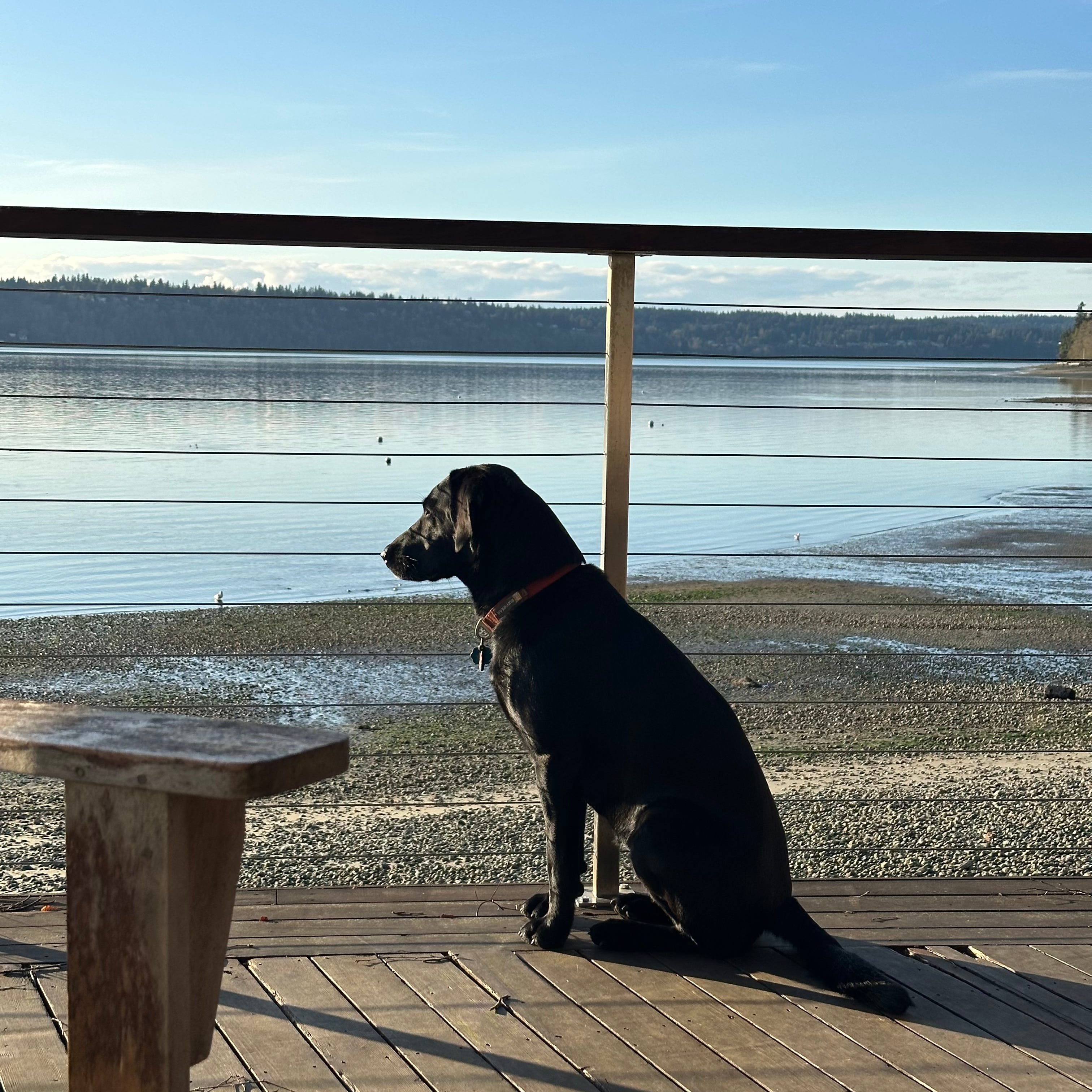
Arya thought bubble: Can you not see that it’s low tide? Want to see your pet in this space? Drop us a photo and some caption material.
Many of those folks pine for the mid-2010s, when Republicans controlled the majority in the Senate, making the losing-slowly thing much easier. A special election in 2017 ended that, and subsequent Trump-influenced elections have made it a distant memory.
David Ammons, the longtime Olympia reporter for The Associated Press and later communications director for the Secretary of State, was formerly chair of the commission. And no, we’re not angling for the job.